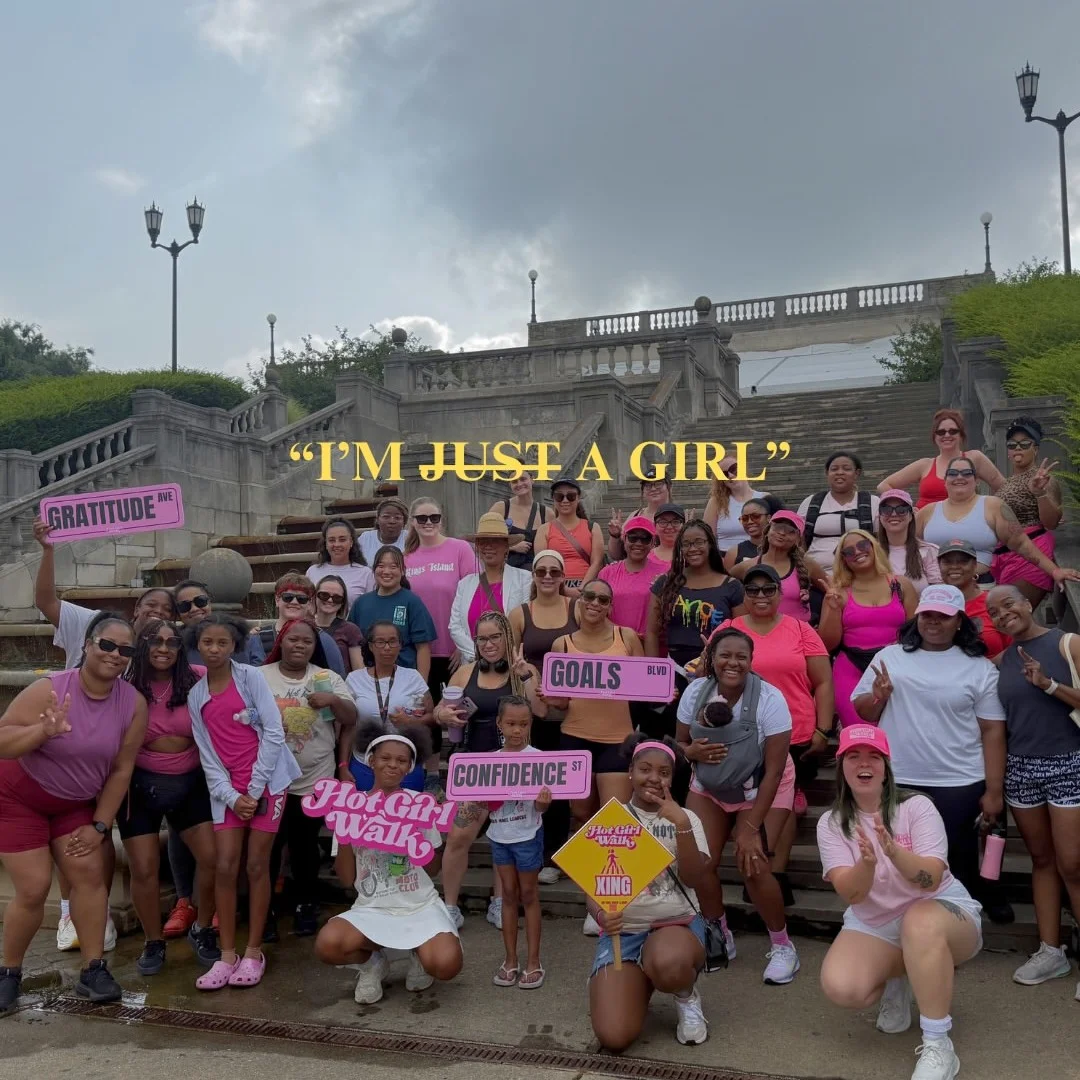
At 9:30 on a Saturday morning, the stone pavilion known as Cop Cot at the southern end of Central Park filled with women in matching sets, sneakers still white, phones up for the group photo before a single step. The Hot Girl Walk that moved through New York on July 25 was billed, in the organizer's words, as a chance to meet new friends and get your steps in. Nobody printed the word single on the flyer. Walk with the pack for twenty minutes, though, and you catch the other thing happening. The glances. The small pace adjustments. Two strangers who fall into step near the reservoir and stay there for the rest of the loop.
The short version is this. In 2026 the walk, not the run, is becoming the place where fit and social people meet each other. Hot girl walk dating sounds like a fantasy until you stand in one of these crowds and watch phone numbers get traded over cold brew at the finish. The appeal is not intensity. It is the absence of intensity, and that turns out to be the entire point.
Why the walk beat the run
Two summers ago the story was running. New York's Lunge and a dozen imitators turned the weekly group jog into something between a workout and a mixer, and the coverage followed. Then came the hangover. When NBC News went out with Manhattan runners last year, one of them, Zion Morrow, 26, was blunt about what run club dating had become. "This one is definitely oversaturated," he said of the biggest club in town. We covered the same shift in our own reporting on whether run clubs are the new Tinder, and the answer kept coming back complicated.
The problem with running as a dating format is baked into running. You are breathing too hard to talk. You are being ranked, quietly, by pace. The fast people cluster at the front and the rest of the field spends forty minutes staring at their backs. A run club sorts people by fitness before it ever sorts them by chemistry. A walk does not. That is the mechanical reason walking clubs are pulling the singles who burned out on the 6 a.m. tempo run.
Walking holds everyone at conversation pace. You can hear a person. You can drop back, drift forward, leave without ceremony. The walk is not a test you pass. It is a conversation you get to have. That one design difference, low stakes over high performance, explains most of what is driving these fitness dating trends right now.
Where the Hot Girl Walk came from
The format has a specific origin. Mia Lind, then a student at the University of Southern California, posted a video in January 2021 describing a four-mile outdoor loop she took to think about her goals, her gratitude, and, in the phrase that stuck, how hot she was. It caught fast. Lind trademarked Hot Girl Walk in 2023 and built it into a small brand with merchandise, sponsors, and ambassador-led events now running across thirty-one cities. The July walk in Central Park was one node in that network.
None of this was engineered for romance. The three-part mantra is gratitude, goals, confidence, a solo mental exercise you happen to do on your feet. But scale a solo ritual up to a few hundred people meeting in the same park at the same hour every week and you have built, without meaning to, a recurring social event with a standing reason to attend. That is fertile ground for wellness dating, the broad shift toward meeting people through how you take care of yourself rather than over a second round of drinks.
The data underneath the vibe
This is not only a New York micro-scene. A study reported by the New York Post at the close of 2025 framed sports and physical activity as one of the leading new ways singles expect to meet a partner in 2026, ahead of the swipe for a growing share of respondents. Our own reporting on running found that roughly one in five people had already been on a date with someone from their club. The direction is consistent across the numbers. Shared movement is doing the work the apps stopped doing.
The apps noticed. Over the past two years the major platforms leaned hard into fitness, adding gym and running prompts, workout badges, and filters for how active you are, an admission that the energy had migrated off the screen. But a badge on a profile is not the same as a body beside yours at conversation pace, and that gap is the exact space the walk fills.
There is a health argument stacked on top of the romantic one, and it is not trivial. A University of Cambridge analysis found that as little as eleven minutes of brisk walking a day is linked to a meaningfully lower risk of heart disease, stroke, and several cancers. A first date that doubles as your cardio is a rare thing. It costs nothing and asks little. That combination, connection plus a real health return, is why healthy date ideas increasingly start at a trailhead or a loop around the reservoir instead of a reservation.
The catch nobody mentions
There is a less flattering read on all of this worth taking seriously. When lifestyle becomes the headline compatibility filter, wellness can shade into a status test. Invite-only fitness dating clubs have started screening applicants the way nightclubs screen a guest list. Dan Ilani, who co-founded one such members' app, told Dazed that "now lifestyle is a much bigger part of identity," which is true and also a little ominous, because a filter that sorts by how you exercise can quietly sort by income, body type, and free time. The open walk in a public park is the democratic answer to that. Anyone can lace up and show up at Cop Cot. No committee votes on you at the gate.
What this means if you are single and sweaty
The practical case for the walk is that it removes the two things that make modern dating exhausting. It removes the interview energy of sitting across a table performing your best self, and it removes the algorithm. This is dating without apps in its most literal form. You show up, you move, you talk, and nobody screenshots the conversation. For anyone worn down by the swipe, the relief is immediate.
It also rewards patience. You are not deciding anything at mile one. You might see the same person three Saturdays running before either of you says more than hello, and that slow build is a feature. Call it slow dating if you want the term, the deliberate choice to let interest develop over repeated low-key contact rather than forcing a verdict over ninety minutes and a shared appetizer. Walking crowds are almost perfectly built for it.
The etiquette is still forming, and it matters. The Hot Girl Walk was built by and largely for women, as a safe and affirming space, and any man treating it as a hunting ground is the fastest way to ruin it. The move is to come for the walk on its own terms. Be a regular. Be useful. Let the rest happen or not. The people finding luck with low-pressure dating in these crowds are the ones who wanted the walk first.
The bigger shift
Zoom out and the walk is one expression of a larger correction. Wellness culture has swallowed the going-out budget. A sauna membership or a Saturday loop has replaced the bar tab as the default social spend, and the dating scene followed the money into gyms, studios, and parks. We have written about how the wellness date replaced the standing offer to grab drinks, and the walk is that same instinct, stripped down further, made free and repeatable.
Whether it lasts is a fair question. Every format that gets popular enough eventually gets crowded, and the run club story is a warning about what happens when a good scene curdles into a market. The walk has one small defense against that fate. It never claimed to be about dating in the first place. Its main purpose survives its side effect. Show up for the four miles and the fresh air, and if you meet someone on the way, that is the walk doing what a good walk has always done, which is clear your head and, once in a while, introduce you to somebody worth slowing down for.