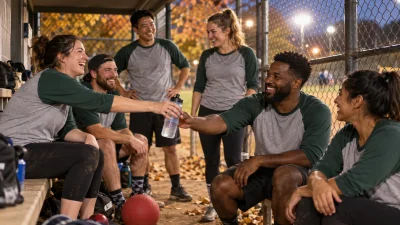
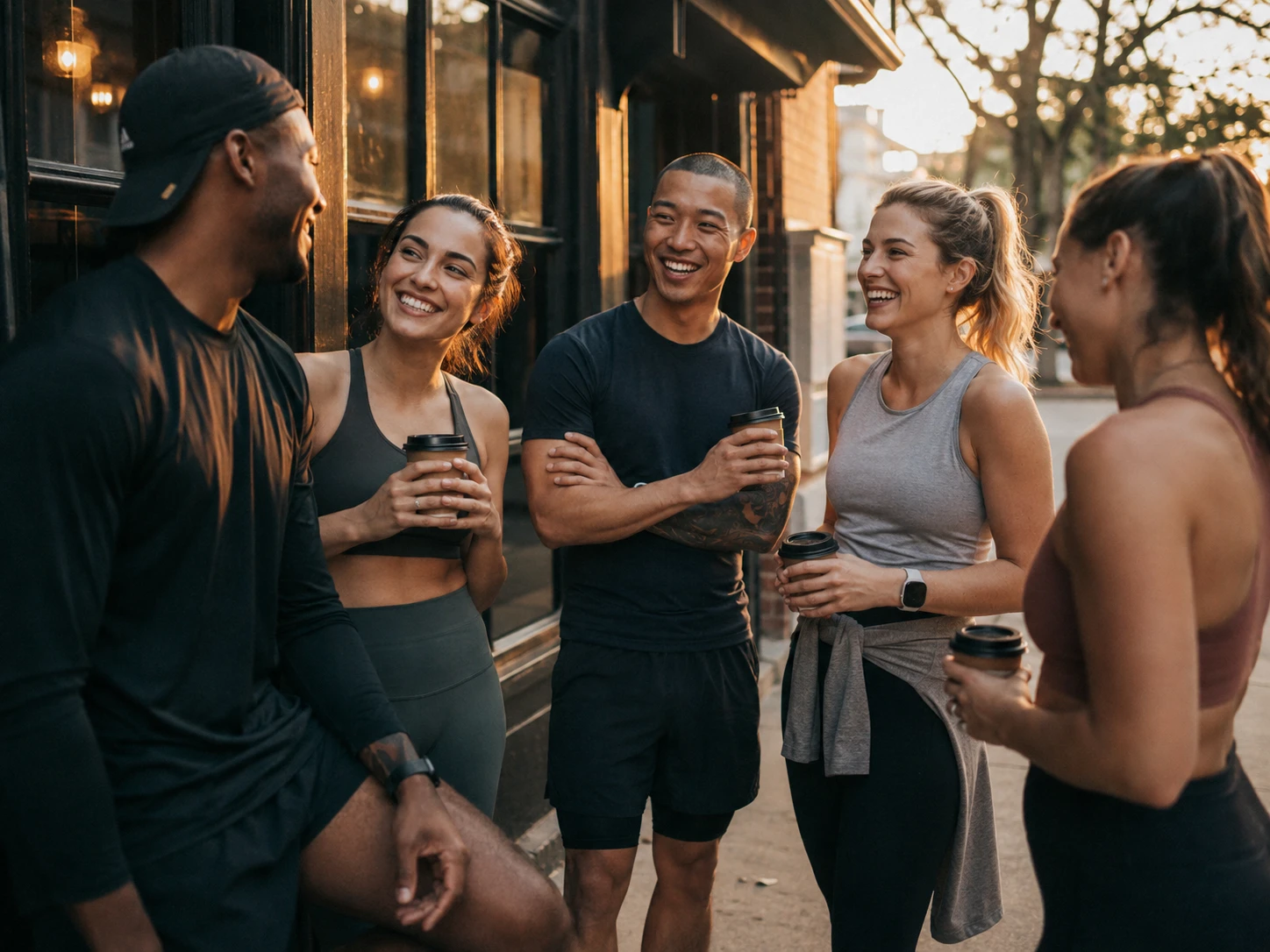
Somewhere right now, at 6 a.m. in a parking lot outside a coffee shop, a few dozen people in mismatched activewear are lacing up and quietly scanning the crowd. They are there to run. They are also, if we are being honest, there to look. Welcome to 2026, where the hottest place to meet someone is not a bar, not a brunch spot, and definitely not your phone. It is a three-mile loop with a conversational pace and a post-run coffee that may or may not turn into a first date.
The short version for anyone deciding whether to show up Saturday: yes, run clubs have genuinely become one of the most active dating scenes for athletic singles, the data backs up the hype, and meeting someone over shared miles really can build a stronger foundation than any swipe. But it is not the frictionless romance fantasy your feed is selling. There is a catch, and we are going to talk about it.
This is not a fringe trend dreamed up by a few influencers. The numbers are loud. Strava, the social fitness platform that has quietly become the heartbeat of running culture, reached roughly 50 million monthly active users in 2025, with downloads climbing 80 percent year over year. New running clubs on the platform multiplied 3.5 times in a single year. And the most telling stat for our purposes: in Strava's own trend report, one in five respondents said they had gone on a date with someone they met through a running club. One in five. That is not a coincidence, that is a pattern.
Marathon registration tells the same story. London's 2026 race drew a record 1.1 million applicants, up 31 percent in a year, while the New York City Marathon pulled a record 200,000 lottery applicants. People are not just running more, they are organizing their social lives around it. David Siik, who founded Equinox's Precision Run Club, has predicted the biggest resurgence in running behavior since the 1970s. The cultural shift is real, and dating app fatigue is the engine behind a lot of it.
Burnout from endless swiping has pushed an entire generation to look for connection somewhere that feels less transactional. A column republished by the New York Post put it plainly when Dr. Zac Turner wrote that run clubs are being hailed as "the new Tinder." The logic is hard to argue with. You meet new people, you bond over shared effort, and nobody is performing for a profile photo.
Here is why the format works so well, and it is the part dating apps were never able to crack. A swipe gives you a curated highlight reel. A run gives you a person. By mile three, when the small talk has burned off and someone is breathing hard, you learn things no bio could ever tell you. Do they slow down for the person struggling at the back, or do they sprint ahead and never look back? Are they competitive in a fun way or an exhausting way? Do they actually show up week after week, or do they flake the second it rains?
Fitness coach Tom Trotter described the appeal to Vogue by saying that at a run club "you're being as real as possible." That is the whole thing in five words. There is no curated outfit, no rehearsed banter, no time to construct a persona. You are sweaty, a little out of breath, and exactly who you are. For athletic singles in particular, this is a genuine upgrade. The compatibility test happens automatically. Someone who treats a hard interval workout with discipline and a sense of humor is showing you, in real time, how they will treat the hard parts of a relationship.
This is the same reason side-by-side activity dates have quietly overtaken the dreaded coffee-and-interrogation format. Shared effort takes the pressure off, kills the awkward eye contact, and reveals character through play. We made that exact case for the court in our look at why a pickleball game beats a sit-down first date, and the running version follows the same playbook. Shared effort is simply a better truth serum than a cocktail.
There is also a comforting bit of data behind all of it. Despite the reputation that young people only meet online, a 2025 study found that 82 percent of Americans in relationships actually met their partner in person, and even among 18 to 29 year olds, 77 percent met the old fashioned way. The apps were never the main character. Run clubs are just giving in-person meeting a structure, a schedule, and a built-in icebreaker.
Now for the catch, because pretending it does not exist would be doing you a disservice. The same qualities that make a run club a great place to meet someone also make it a complicated place to date someone. When your romantic prospect and your weekly workout occupy the same parking lot, the stakes get high fast.
Recent reporting has pumped the brakes on the fairy tale. A Time essay this spring argued bluntly that running clubs can be a difficult place to date, describing scenes where the social dynamics start to feel less like a running community and more like a high school cafeteria with cardio. NBC News, covering one of the massive singles clubs that ballooned to roughly a thousand weekly runners, found the predictable downsides at scale. People ghost. People fudge their relationship status. And then you have to watch the person who ghosted you jog past at next week's meetup, which is its own special kind of cardio.
The lesson is not that the trend is fake. It is that a run club is a community first and a dating pool second, and the people who get burned are usually the ones who flip that order. Treat it like a singles bar with sneakers and you will exhaust both the romance and your welcome. Treat it like a place to build a life you actually enjoy, where romance is a possible bonus, and the whole thing changes.
So how do you ride this dating trend without ending up as someone's awkward Wednesday-night story? Start by showing up for the running, genuinely. Build real friendships, learn names, become a regular. The people who treat the club as a community rather than a hunting ground are, ironically, the ones who get the most dates, because consistency reads as character.
Move slowly and read the room. Repeated, low-pressure contact is the entire advantage of fitness dating, so let attraction build over several weeks instead of cornering the newest member on their first day. When you do make a move, take it off the route. Invite them to a separate coffee, a different race, or a low-key meal, so that if it does not work out, you have not detonated your one reliable workout. And protect the group dynamic. Nobody wants their favorite club to dissolve into a soap opera, so handle rejection and breakups like an adult who plans to keep showing up.
One more piece of practical wisdom that the social fitness world rarely mentions: take care of your body so you can actually keep showing up. The romance only works if you are still running in three months, and that means treating hydration and recovery as seriously as your pace. Our partners over at H2Goals break down exactly when plain water is enough and when your body genuinely needs electrolytes to bounce back, which matters more than you think when you are suddenly running four days a week to maximize your odds of running into someone. A few minutes of post-run mobility work, the kind the team at KitsnCo covers in their recovery and stretching guides, will keep you on the road and off the injury bench. And if the in-person scene starts to feel like too much, there is nothing wrong with letting smarter online dating tools do some of the filtering. The shift toward authenticity is happening everywhere, including the apps, as we covered in our breakdown of Bumble moving past the swipe.
Run clubs earned their reputation as the new Tinder for a simple reason. They put real people in front of you, strip away the performance, and let attraction grow out of something shared rather than something staged. The data is on their side, the cultural moment is on their side, and frankly, the science of how attraction actually forms is on their side too. But the magic is in the mindset. Show up to run, not to score, and you will be amazed how often the running takes care of the rest. Worst case, you got a great workout and a free coffee. Best case, you are training for a marathon next year with someone who already knows exactly who you are at mile three. Either way, that is a far better outcome than another night of swiping into the void.