On a Tuesday evening in May, a few hundred New Yorkers who had been on a waitlist since winter finally got the text they wanted. Their invitation was live. Not to a rooftop bar, not to a wine tasting, but to an app that would let them swipe for exactly eleven minutes before politely kicking them off.
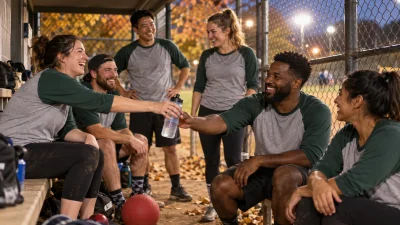
That app is ateam, and it launched in New York on May 20, 2026, off a waitlist of roughly eight thousand people. Its founders, the married team of Dan Ilani and Megan Baldwin, built it around a simple bet: that the strongest signal of romantic compatibility is not what you drink but how you move. There is no Like button. There is a feature designed to make ghosting harder. And there are more than fifteen studio partners, from Aarmy to Brooklyn Track Club, feeding the thing a steady supply of people who already sweat together.
The pitch: your workout is your dating profile
The new class of wellness dating apps is not subtle about its thesis. Ilani put it plainly when the app debuted: "We've optimized almost every aspect of wellness except the way we meet." The idea is that if you already organize your life around a 6 a.m. class, a long run, or a lifting split, then the person who shares that rhythm is a better match than the stranger you met over two old fashioneds you did not really want.
ateam is not alone. Sitch leans on artificial intelligence to match people on lifestyle rather than looks. In the United Kingdom, Lunge pairs a run club with a bar at the finish line, which is either the best of both worlds or a small joke about how hard old habits die. What ties them together is a single, and genuinely interesting, wager: that a shared fitness dating app habit predicts more than a shared taste in cocktails ever did.
Why now
The timing is not an accident. Americans are drinking less than at any point on record. As of last summer, only about 54 percent of adults said they drink alcohol at all, an all-time low, which quietly dismantles the entire architecture of the old first date. If the bar is no longer the default meeting ground, something has to replace it, and a lot of people have decided that something is a workout. The rise of sober dating is not a niche. It is becoming the norm.
The demand data backs the vibe. When the app Feeld looked at what people were adding to their profiles, interest in tennis had jumped roughly 600 percent and gym and workout mentions were up around 350 percent, with sports occupying eight of the ten fastest-growing interests among Gen Z daters. The move toward dating without alcohol and toward sweat as a social currency is not a marketing invention. It is already sitting in the profiles, waiting for the apps to catch up.
Inside the eleven minutes
The mechanics are the message. An eleven-minute daily cap is a rebuke to the doomscroll, and anyone who has felt the particular exhaustion of the endless swipe can appreciate a product that refuses to let you rot in it. Stripping out the Like button removes the slot-machine hit of the match. The anti-ghosting nudge treats a person on the other end as a person, not a card to be flicked away. None of this is romance, exactly. It is design, and it is quietly trying to make us behave better than the last decade of dating tech let us.
Whether the friction lasts is another question. Every dating platform starts with good intentions and a clean interface, and most drift toward the very engagement traps they once swore off, because attention is the business model underneath. The interesting thing about this cohort is that friction is the product, not a phase it will grow out of. If ateam ever quietly adds a Like button, we will know the experiment lost its nerve.
The case for it, honestly
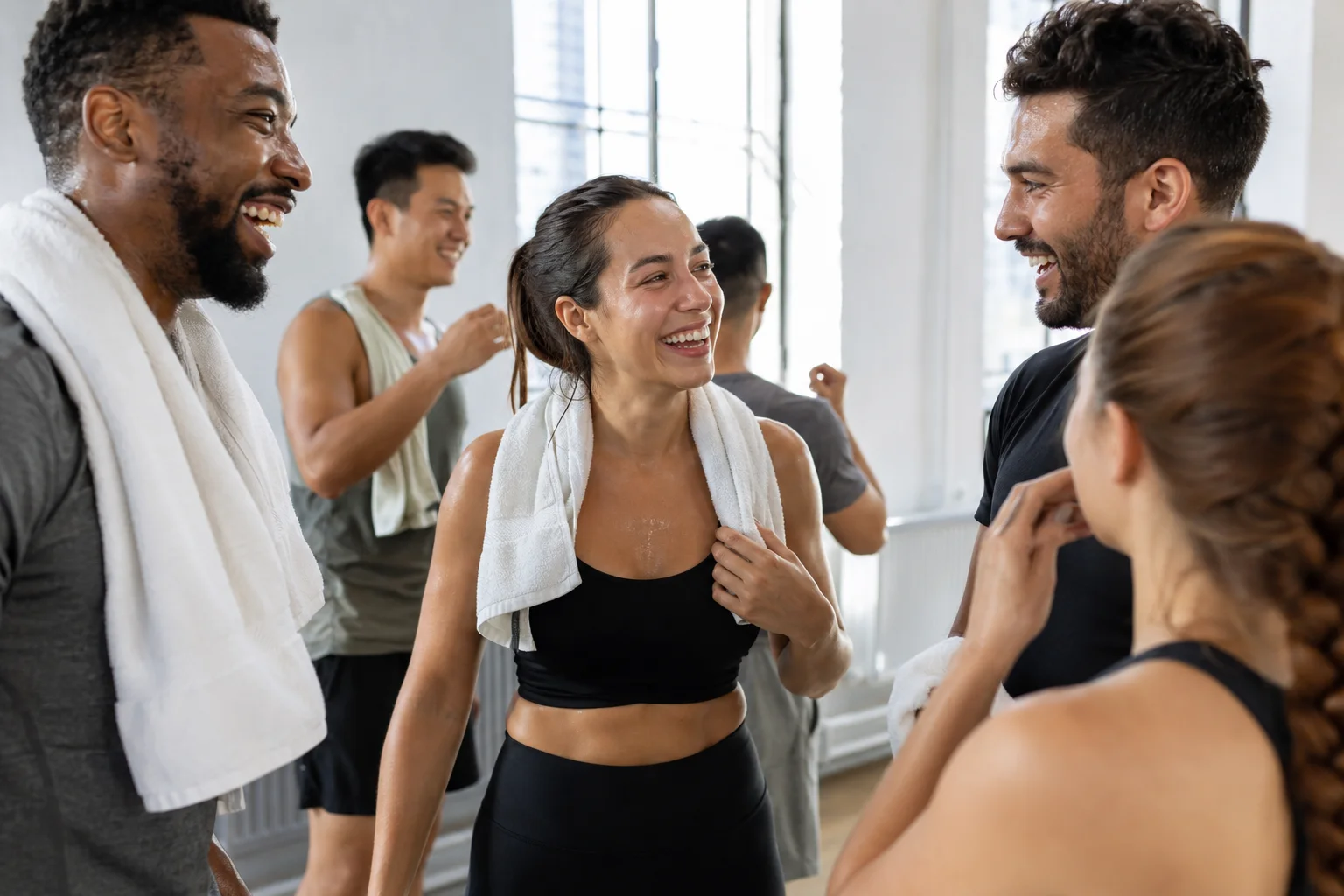
Here is where we will show our hand: a lot of this is good. Meeting someone at 7 a.m. with no makeup, no filter, and a heart rate of 150 tells you more in twenty minutes than three carefully staged dinners. Shared effort builds a specific kind of trust, the kind you cannot fake across a candlelit table. And for anyone rebuilding a social life without a drink in hand, an app that assumes the date is a class and not a round of drinks removes a real source of pressure.
We have argued this before. When we looked at how running crews became a real on-ramp to romance, the lesson was that putting a shared activity first and the flirting second is what makes the whole thing work. That is exactly the logic these platforms are trying to bottle. Done right, run club dating and its app-based cousins are the healthiest version of healthy date ideas going: less audition, more shared motion, and a much softer landing when the chemistry is not there.
The part that should make us uncomfortable
Now the harder truth. A filter that sorts for fitness can quietly become a velvet rope. When an app builds matching around "lifestyle," lifestyle can slide into a proxy for body type, income, and the free time that only some people have. Critics of wellness-era dating have warned that it risks streamlining discriminatory preferences under the friendly language of health, and that warning deserves to be taken seriously rather than waved off with a protein shake.
The danger of fitness gatekeeping is that it dresses an old bias in new athleisure. A person recovering from injury, a shift worker who cannot make the 6 a.m. class, a beginner two weeks into their first program: none of them are less worthy of connection, and an app that treats a studio membership as a character reference can make them feel like they are. Even ateam's own community members push back on this from the inside. As committee member Nneoma Anosike framed it, "True wellness is about inclusivity, representation and community." That is the standard to hold these platforms to, and it is a high one.
How to use the trend without letting it use you
So date around your values and your sweat, not somebody else's idea of an acceptable body. Pick the activity you would do anyway and let it carry the first meeting. Treat the ateam dating app and its rivals as one tool among many, not a verdict on your worth. If a profile reads like a fitness resume, keep scrolling. If it reads like a person, stay a minute. The goal was never to find someone who lifts the same number as you. It was to find someone worth slowing down for once the workout ends.
The wellness era of dating is here, and it is mostly a gift. The trick is to keep the joy and refuse the gatekeeping, to remember that moving your body toward someone is supposed to be about connection and not a screening. Value yourself first, on the days you crush the session and the days you skip it entirely, and the right match will meet you there. If you need a reminder of how to do the work of valuing yourself, we wrote a whole guide to it. Start there. Then go for the run.