For more than a decade, the apps trained us to do one thing above all else: perform. Pick the photo with the best lighting, write the wittiest one-liner, project a life that looks effortless and curated and just slightly out of reach. We all learned the choreography. And we are all, quietly, exhausted by it. So it says something that the biggest names in dating are now backpedaling, openly admitting that the pressure to look perfect is the very thing killing real connection. The fix they are circling toward is one that active, athletic people have understood for years. You cannot fake who you are when you are sweating.
The short answer for anyone tired of curating themselves into a stranger: the era of the flawless profile is ending, the data and the platforms both say so, and the people best positioned to thrive in what comes next are the ones who already build their lives around effort, consistency, and showing up as they actually are. If that sounds like you, read on, because your gym selfie just became your secret weapon.
In late April 2026, Hinge quietly updated a feature called Signals, then followed it in May with a blog post billed as a guide to dating without the pressure to be perfect. The framing is striking coming from a dating apps giant. Hinge cited research showing that 63 percent of Gen Z daters feel pressure to appear more put-together than they really are, and that many believe they have to have everything figured out before they are even worthy of connection. Sit with that number. Nearly two in three young daters are walking into romance already convinced they need to hide who they are.
Logan Ury, the lead relationship scientist at Hinge, summed up the shift bluntly, telling the company that "people are tired of the pressure to show up a certain way." The Signals feature itself is the tell. It is a small heart badge that does not reward your jawline or your golden-hour selfie. It rewards behavior: actually reading a profile before liking it, writing a real comment instead of a lazy "hey," messaging your matches, and following through to confirm a date. You cannot buy it. You earn it by doing the unglamorous, consistent work of showing up with care.
If that philosophy sounds familiar, it should. Rewarding intentional effort over surface polish is the exact value system that every athlete, lifter, runner, and yogi already lives by. Nobody gets a personal record from a filter. You get it from reps.
Here is the cruel math of the perfect profile. The more flawless you appear, the higher the expectations you set, and the more inevitable the letdown when a real, three-dimensional human shows up to the date. Perfection is not attractive, it is alienating. It signals distance, not intimacy. People do not fall for the highlight reel, they fall for the blooper reel, the laugh that is a little too loud, the competitive streak, the way someone gets quiet when they are tired.
This is the paradox the apps accidentally engineered. By optimizing every profile into a marketing campaign, they trained an entire generation to lead with their most edited self and then wonder why nothing felt real. The authenticity people are starving for is not a new aesthetic. It is the simple permission to be a work in progress. You do not have to have your career, your body, your finances, and your emotional life perfectly sorted before you are allowed to want connection. The platforms are finally catching up to what should have been obvious. Polish is not the point.
And the proof is in where people are actually finding each other. Even as the apps dominate the conversation, a 2025 study found that 82 percent of Americans in relationships met their partner in person, not on a screen. The flawless profile was never the thing that worked. Real connection was always built somewhere messier and more honest.
This is where athletic singles have a genuine, almost unfair edge. The single best way to escape the perfection trap is to meet people in a context where perfection is physically impossible, and there is no better venue for that than a workout. You cannot perform an idealized version of yourself when you are red-faced at mile four, fumbling a kettlebell, or wobbling out of a balance pose. The mask comes off because there is no way to keep it on.
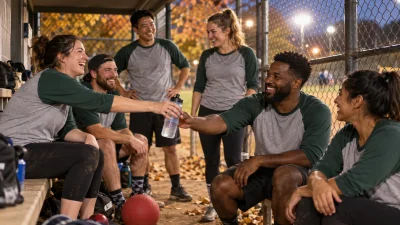
That is the quiet genius of fitness dating. The thing the apps are now desperately trying to manufacture with badges and behavioral nudges, the gym and the trail and the studio hand you for free. When you meet someone over shared sweat, you skip past the curated version entirely and land on the real one. You see how they handle frustration, whether they encourage the person struggling next to them, and if they take the work seriously without taking themselves too seriously. This is exactly why the rise of run clubs and activity-based meetups has become such a powerful alternative to swiping, a shift we broke down in our look at why run clubs became the new Tinder.
There is a deeper reason this works for active people specifically. If your identity is already built around showing up, repeatedly, even when it is hard, you have a head start on the entire premise of healthy dating. Consistency, effort, and the willingness to be seen mid-struggle are the foundation of any good relationship. Athletes are not learning these skills from a dating app. They are already practicing them every single morning.
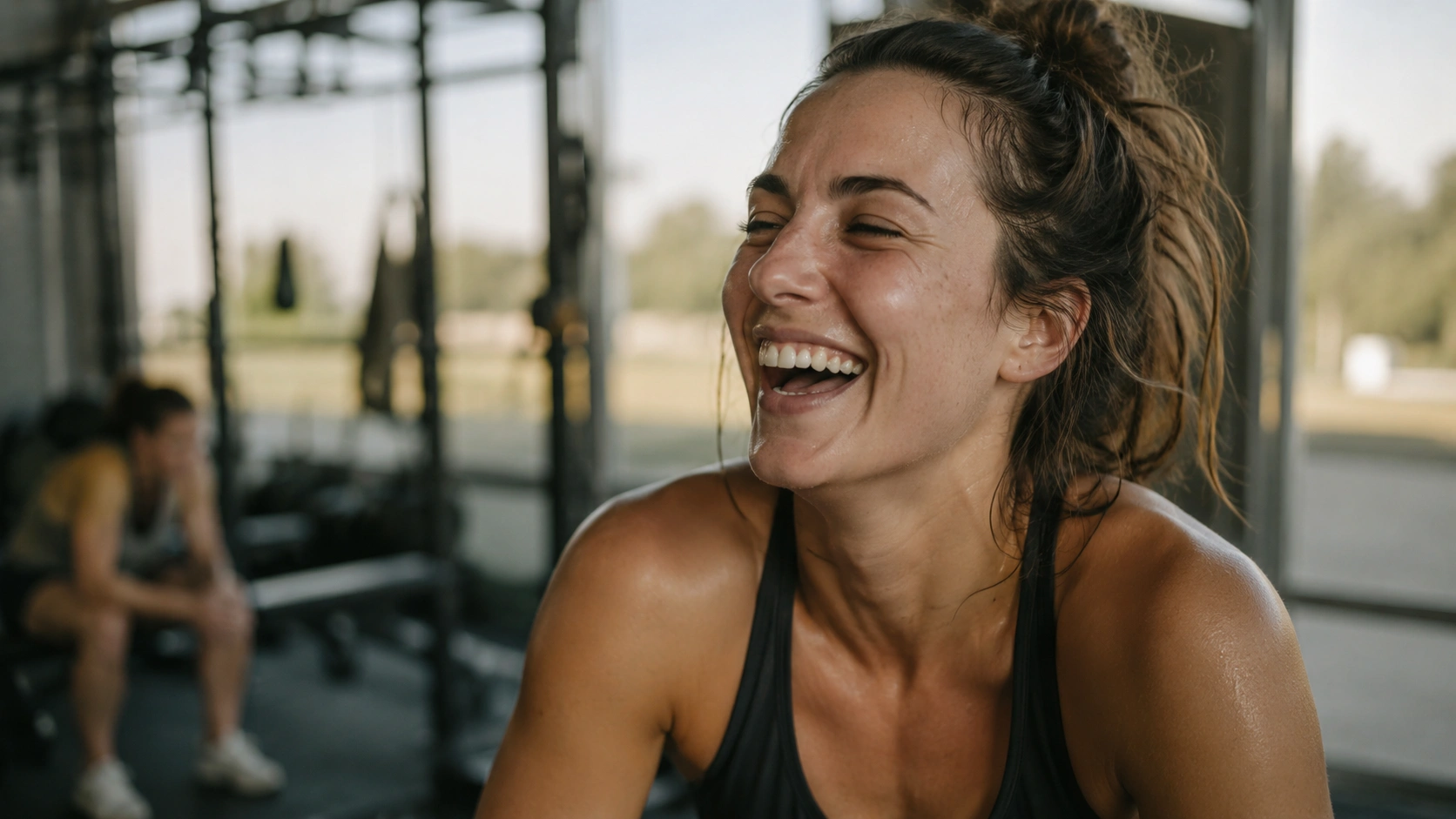
So how do you put the anti-perfect era to work, both online and off? Start by deliberately choosing one unpolished, true photo for your profile. Not the blurry mess, but the candid one where you are actually laughing, post-workout, hair a disaster, genuinely yourself. It will outperform your most flattering posed shot every time, because it reads as a person rather than a billboard.
Lead with what you are still working on instead of what you have mastered. Saying you are training for your first half marathon and slightly terrified is a thousand times more magnetic than pretending you have it all figured out. Vulnerability is the new flex, and the platforms are literally building features to reward it. Lean into the online dating tools that now favor effort, since responding thoughtfully and following through is both easy for a disciplined person and increasingly visible to the people you want to attract.
Then do the part that matters most, and take it into the real world quickly. Suggest a walk, a class, a low-key active hangout instead of the high-pressure dinner where you both feel obligated to perform. And here is the piece almost nobody mentions: a lot of the urge to appear perfect comes from anxiety, not vanity, and that anxiety responds to the same tools as any other stress. A consistent mindfulness or breathwork practice quiets the inner critic that whispers you are not put-together enough to be loved. The team at KitsnCo covers exactly this kind of self-acceptance and mindfulness work, and it does more for your dating life than any new profile photo. If the apps themselves still feel exhausting, that is fair too, and the broader industry is shifting in your favor, something we covered when Bumble moved away from the swipe toward deeper compatibility.
When the company that helped build the perfect-profile machine starts telling people to stop trying to be perfect, the cultural wind has clearly changed direction. The flawless, frictionless, filtered version of dating is collapsing under its own weight, and what is rising in its place rewards exactly the qualities active people already have in abundance. Effort over image. Consistency over performance. The courage to be seen, sweaty and unfinished, instead of curated and unreachable. You spent years being told to look like you had it all together. Turns out the most attractive thing you can do is admit you do not, lace up, and show up anyway. That is not a weakness to hide. It is the whole point.